
The 7 Stages of Renovation Grief (And How to Survive Each One)
If you’ve ever lived through a renovation, you know it has its own emotional arc. Not grief in the true sense, but a very real roller coaster of highs, lows, and moments where you genuinely question every decision you’ve ever made. Having been through two renovations and currently in the middle of a third, I feel qualified to map the territory.
Fair warning: these stages are not always linear. You may cycle back through stage three several times before you ever see stage six. That is normal, and you are not alone.
Consider this your field guide.
Stage 1: The Honeymoon
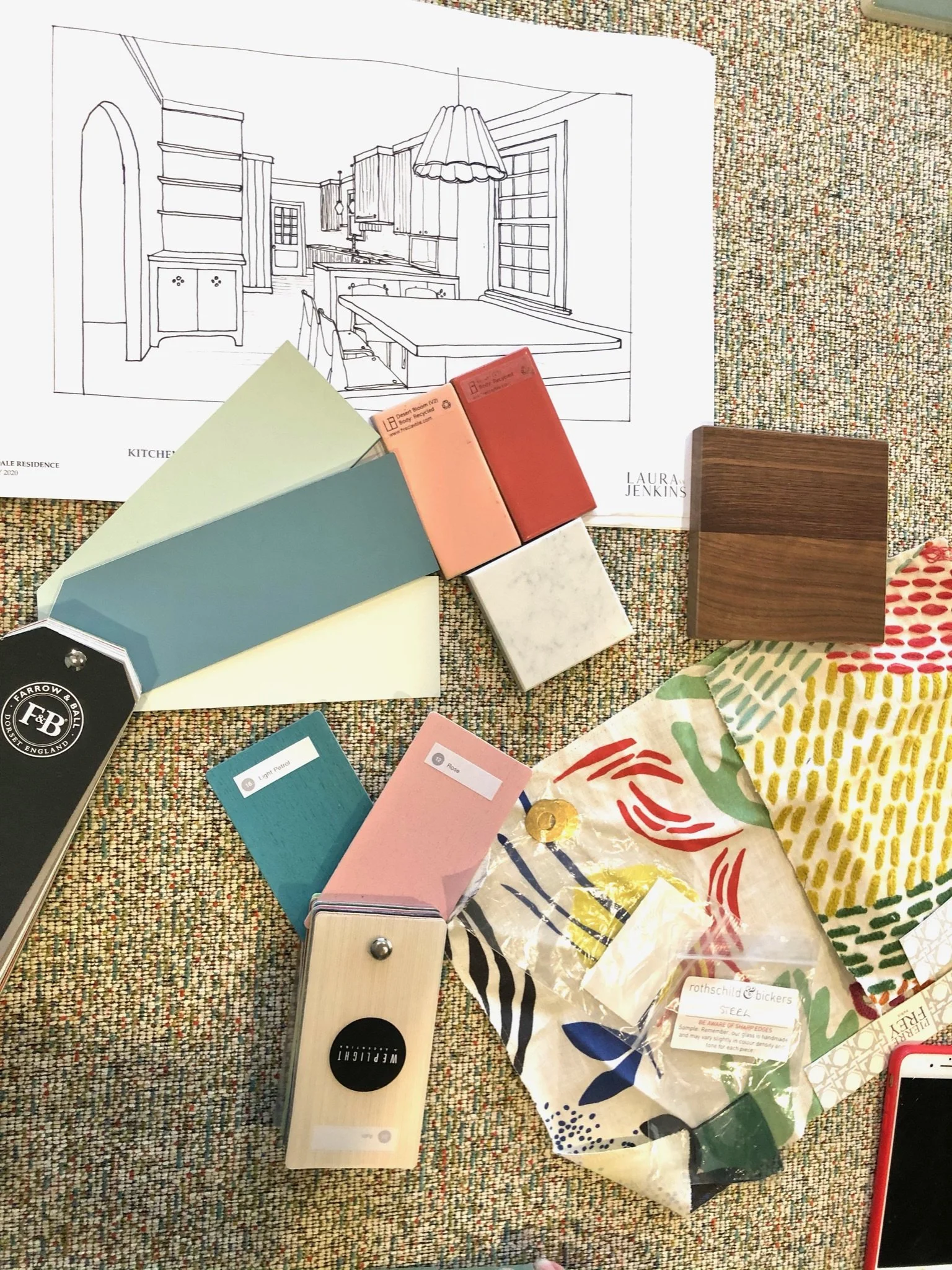
Yay! Picking finishes, paint colors, fabrics! Fun!
This is the good part. The fun part. The part you will look back on fondly from the depths of stage four.
Whether you’re working with an interior designer and architect or going the DIY route, the planning stage is where everything feels possible. The mood boards are coming together, the selections are being made, the spaces are taking shape on paper. You are in a state of excited, hopeful, wide-eyed beauty bliss. You get to look at all the pretty pictures and pick all the pretty things.
Soak it in. This is your calm before the storm of destruction rolls through.
SURVIVAL TIP: Use this stage productively. Declutter and edit your belongings before demo starts. Decide what’s coming back into the new space and what isn’t. It’s infinitely easier to make those decisions now than when you’re living in dust and chaos. Future you will be grateful.
Stage 2: The Point of No Return
The contracts are signed. The deposit is paid. It’s happening.
This stage still has a sheen of excitement to it, but it’s the feeling of cresting the top of a roller coaster hill. You can see what’s coming. There is no turning back. You take a breath, grip the bar, and remind yourself that this is going to be worth it.
Wide-eyed innocence and barely-contained terror, in equal measure.
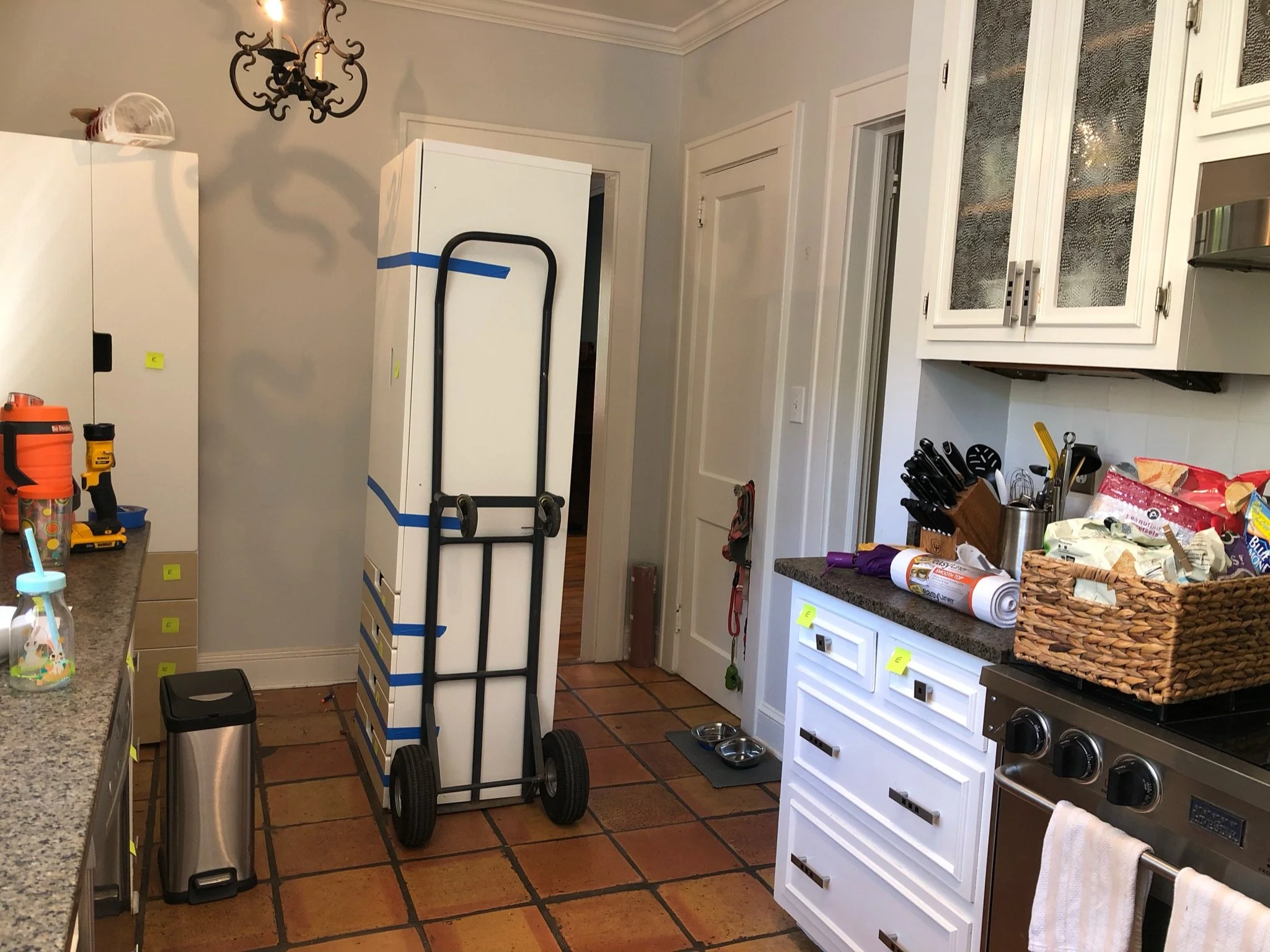
Here we go! Out with the old…
SURVIVAL TIP: Before work begins, have a direct conversation with your contractor about communication and project management. Who is your point of contact? How often will you get updates? Get key milestones in writing and ask how they handle unexpected discoveries. Ambiguity is where renovation stress is born. Clear it up now, not in stage five when nobody is returning your calls.
Stage 3: The False Start
Demo is secretly thrilling. Things are happening. Progress is visible. There is something deeply satisfying about watching the old thing come down to make way for the new thing.
And then, crickets.
Hurry up and wait is the universal renovation experience and nobody warns you about it adequately. The demo happens fast. Everything after it takes forever. This is when the frustration starts to quietly build, right around the time you realize that “two weeks” is a contractor’s most optimistic unit of measurement.
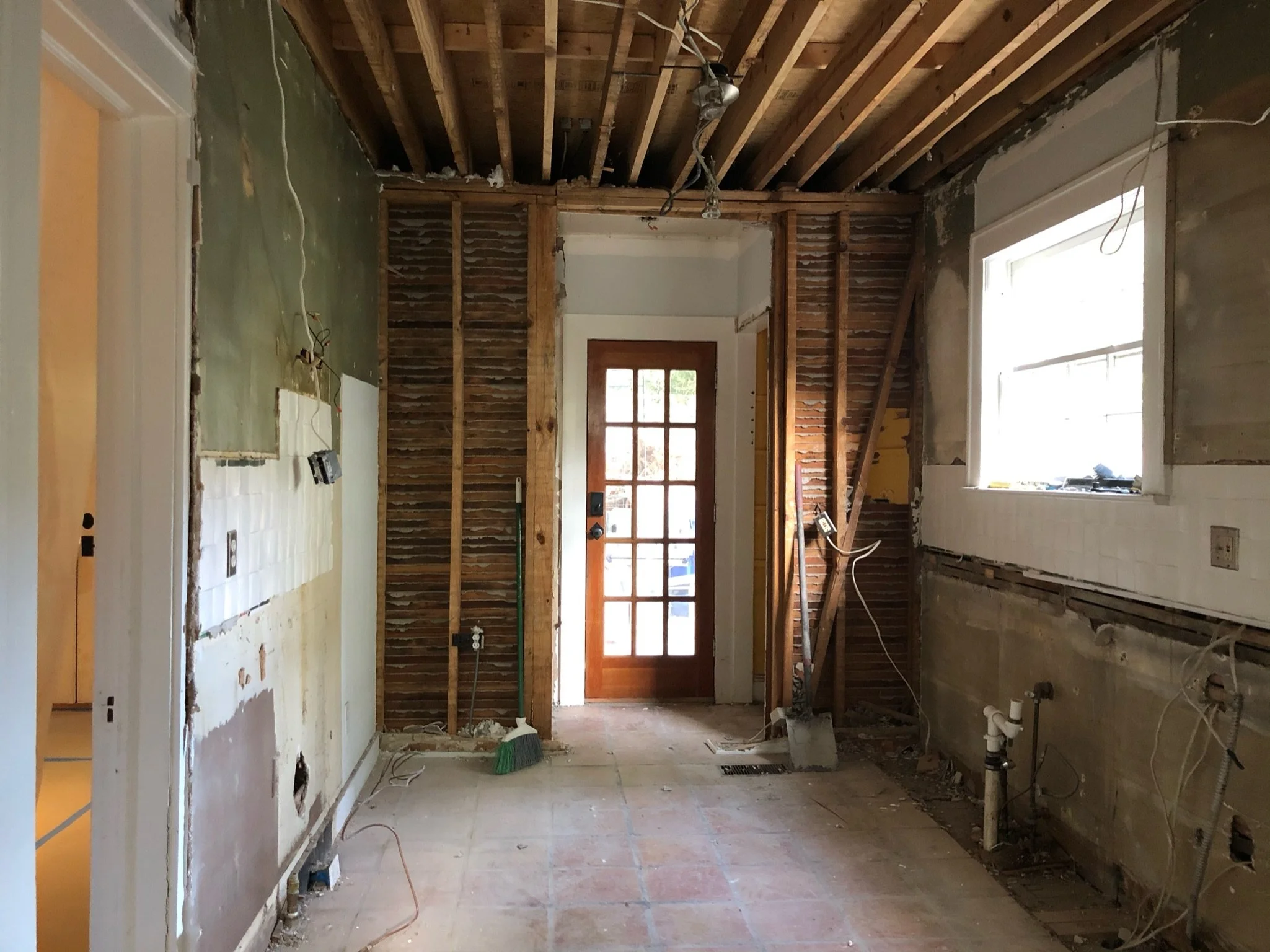
We’re in it now.
SURVIVAL TIP: Build more buffer into your timeline than you think you need, and then add more. Whatever the contractor tells you, add thirty percent. Not because contractors are unreliable, but because renovations surface surprises. Unexpected things behind walls, backordered materials, permit delays. A realistic timeline expectation won’t make the waiting easier but it will make it less maddening.
Stage 4: The Trenches
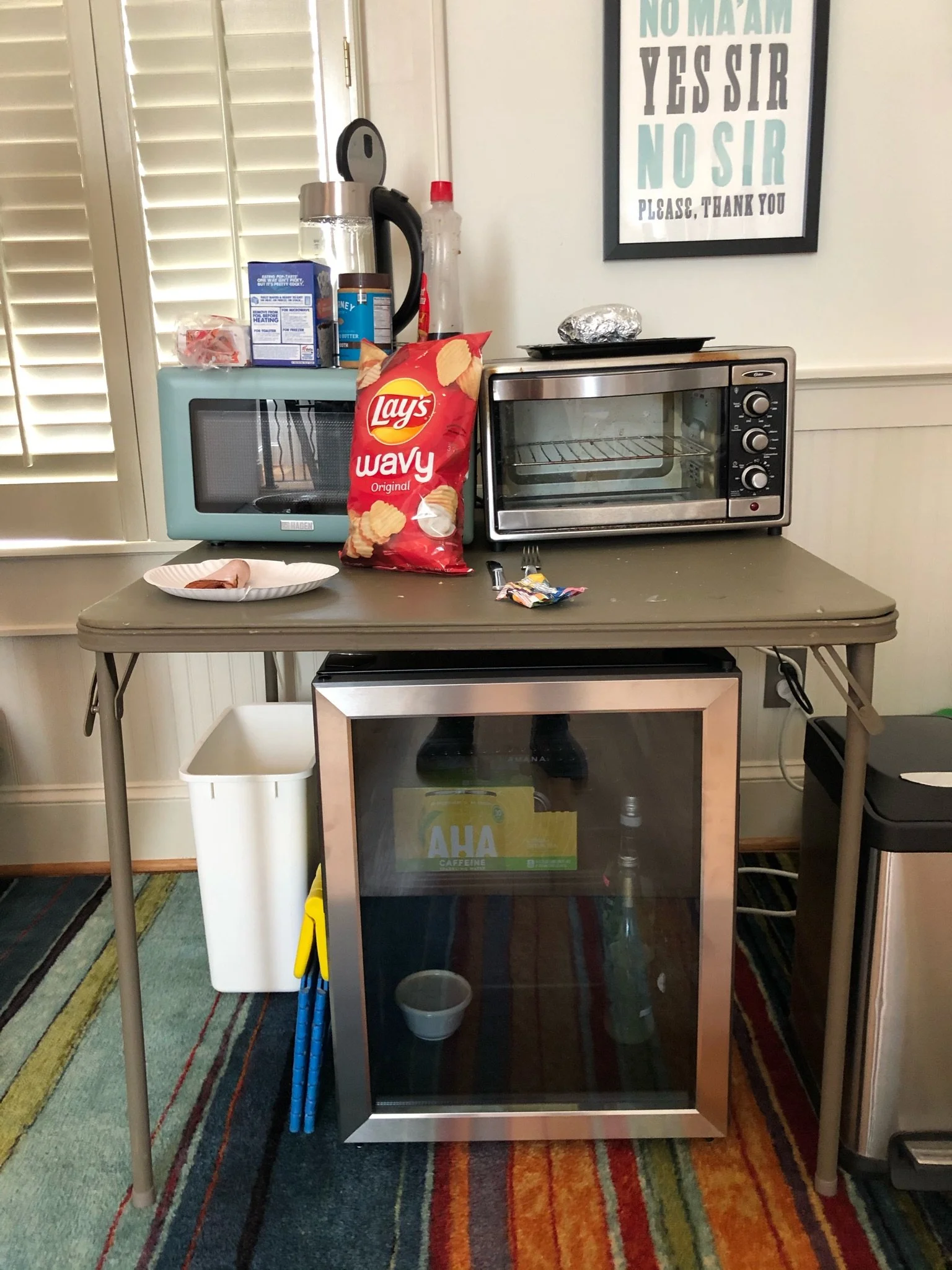
The sad makeshift kitchen in the upstairs landing.
This is the stage nobody talks about honestly enough.
If you are living in the space, it is dirty, it is messy, and it always takes longer than anyone says it will. The key to surviving it is identifying whatever spaces in your home are untouched by the renovation and intentionally protecting them as calm zones. During our own kitchen renovation, the upstairs landing and bedrooms became our sanctuary. We were also lucky to have a garage apartment that served as a temporary living space, which I fully recognize is not the norm. But the principle applies regardless of your situation. Find your untouched rooms, keep them clean, and protect them. You need somewhere to decompress at the end of a dusty day.
If you are living elsewhere during the renovation, the challenge is different but equally hard. The waiting, the wanting to be back in your home, the feeling of being completely at the mercy of someone else’s schedule. That helplessness is real and it is genuinely difficult.
SURVIVAL TIP: Managing your stress during this stage is non-negotiable. Get outside every day. Leave the house when the walls close in. A coffee shop, an errand run, anywhere that isn't covered in drywall dust. At night, find something that helps you decompress before bed. I use the Headspace app for a short meditation every night, and on renovation nights it earns its place more than ever. A renovation is a marathon. Pace yourself.
Stage 5: The Reckoning
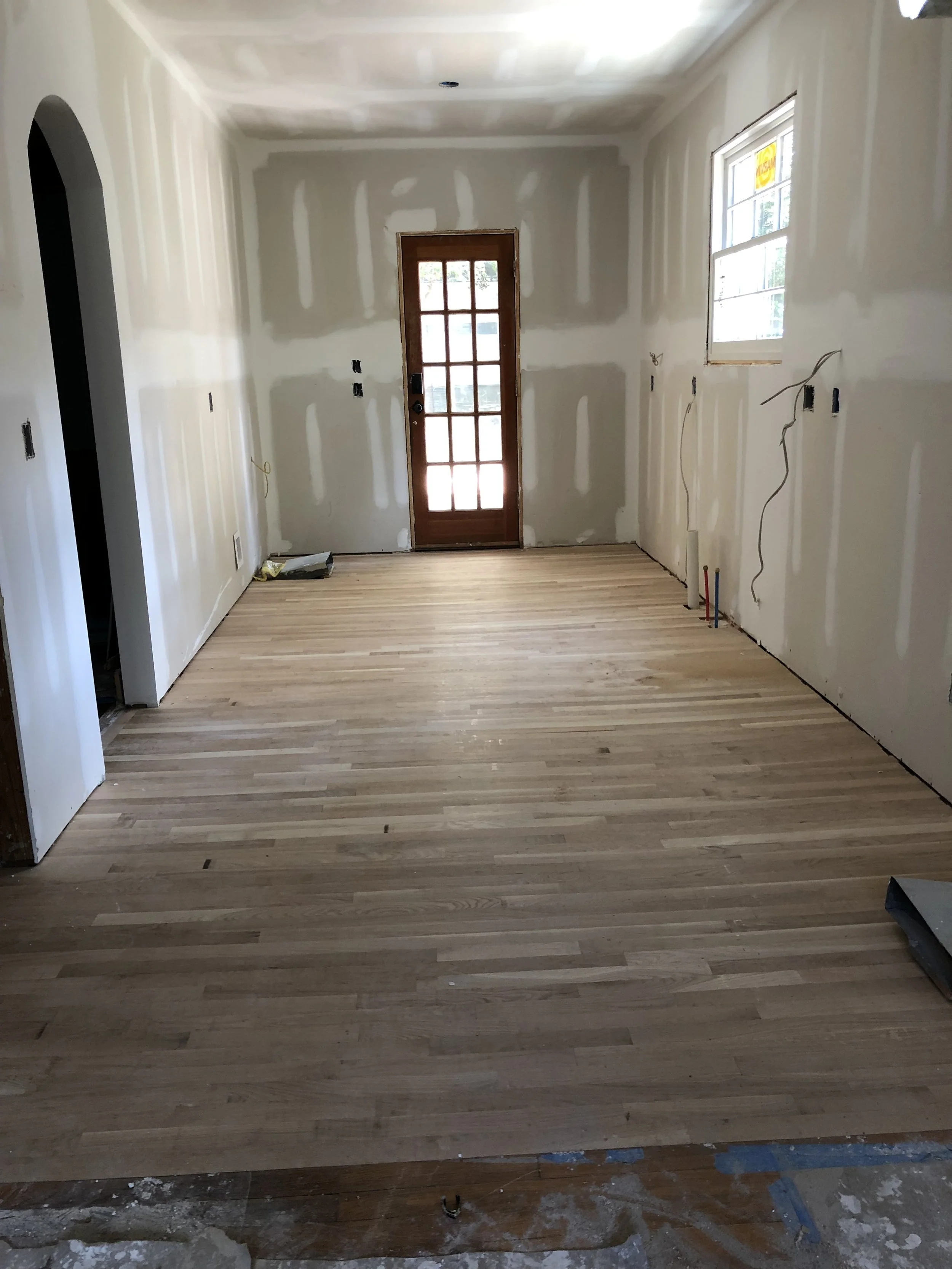
Will this ever end?
Stage five is the one that breaks people. It is the renovation equivalent of mile eighteen of a marathon. You are too far in to quit and not close enough to the finish line to feel good about anything.
The project is dragging. Things are falling through the cracks. You are a month or two behind schedule and the budget is quietly creeping upward. The drywall is up and the siding is on but there is still so much left to do that the finish line is genuinely hard to see. Stage five is not a stage so much as a weather system you just have to live inside of for a while.
This is also when the second-guessing sets in. Did I pick the right tile? Is that grout color going to work? Why did I choose that fixture? Every selection you made in the blissful haze of stage one is now under internal review.
SURVIVAL TIP: Make a list of outstanding selections and decisions that still need to happen to move the project forward. Last minute choices that haven’t been made or materials that haven’t been ordered can quietly stall a project. Getting ahead of those gaps gives you something actionable to focus on when everything else feels stuck. And when the mental load gets heavy, go back to the stress management habits from stage four. They matter just as much here, possibly more.
Stage 6: The Light
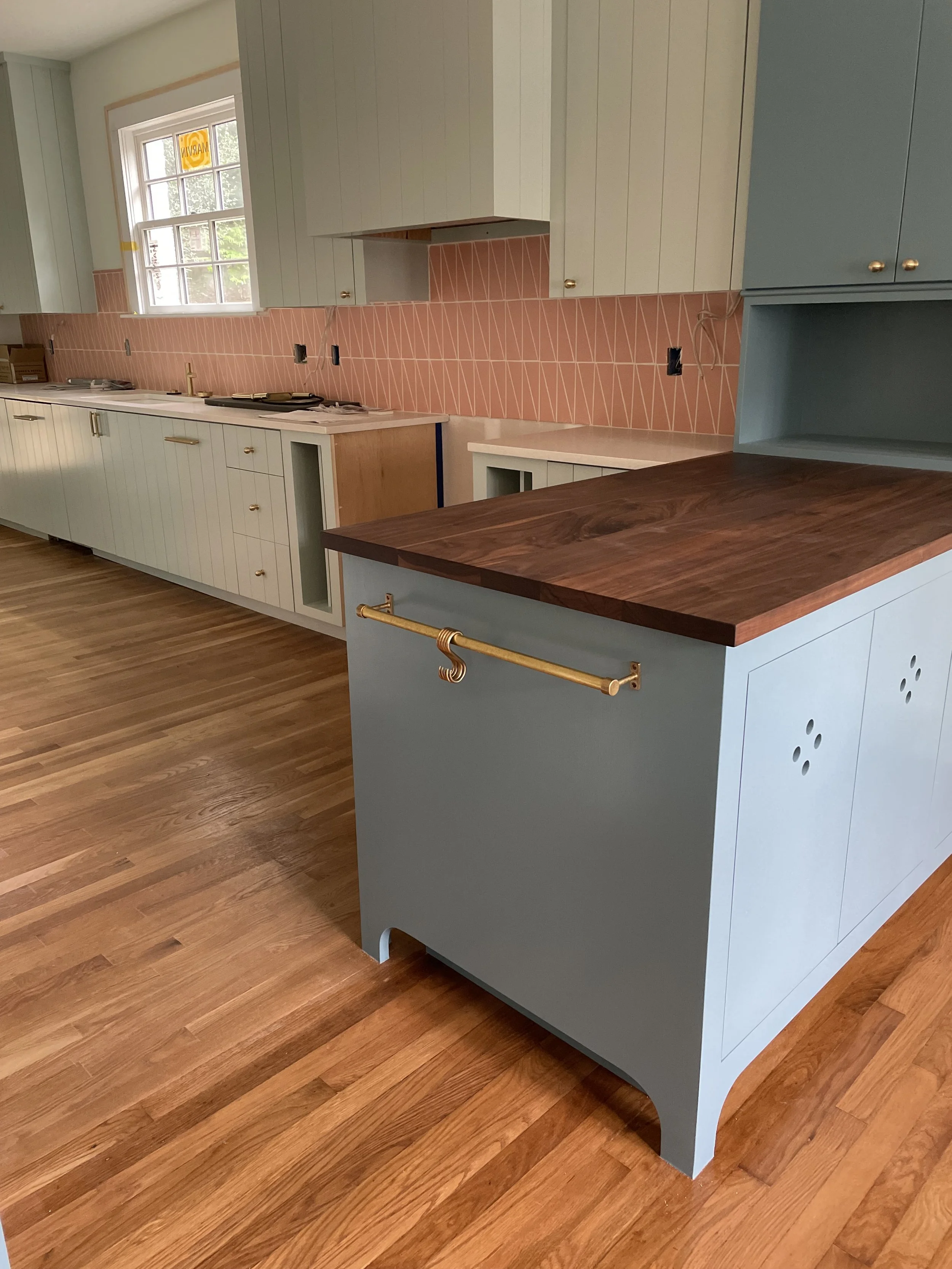
Progress!!
The flooring is in. The cabinets are installed. The walls are painted.
Oh. There it is.
The dust is settling and you can finally see the vision coming to life in a tangible, real, standing-in-front-of-you way. This is the stage where you remember why you started. The finish line is not only visible, it is close. Everything you chose in stage one is starting to make sense together and it is better than you imagined.
SURVIVAL TIP: Before you start moving everything back in, pause. This is your opportunity to be intentional about what comes back into the new space and how it lives there. Don’t just unpack boxes the same way things were before. Think about how you actually use the space, what should be most accessible, what the flow should feel like. A renovation is a rare chance to set up systems from scratch. Use it.
Stage 7: Fool Me Once
It’s done. It’s beautiful. You are standing in your finished space soaking in the fresh paint and the new light fixtures and the countertops you agonized over for three weeks and they are perfect and it was all completely worth it.
The pain of stages three through six has evaporated. You have forgotten the dust, the delays, the budget conversations, the nights of takeout, the moment in stage five when you genuinely considered just living with the old kitchen forever.
It’s like having a baby and forgetting the hard parts the moment you’re holding something new and beautiful. The shiny new space is doing its job.
Which is exactly how I ended up doing this a third time.
Fool me once.

In with the new!
ONE FINAL TIP: Document everything before, during, and after. The before photos feel unnecessary in the moment and become invaluable later. The after photos are obvious. But the during photos, the chaos, the makeshift kitchen, the dust covered everything, are the ones that remind you what you actually went through and make the finished result feel even better.